
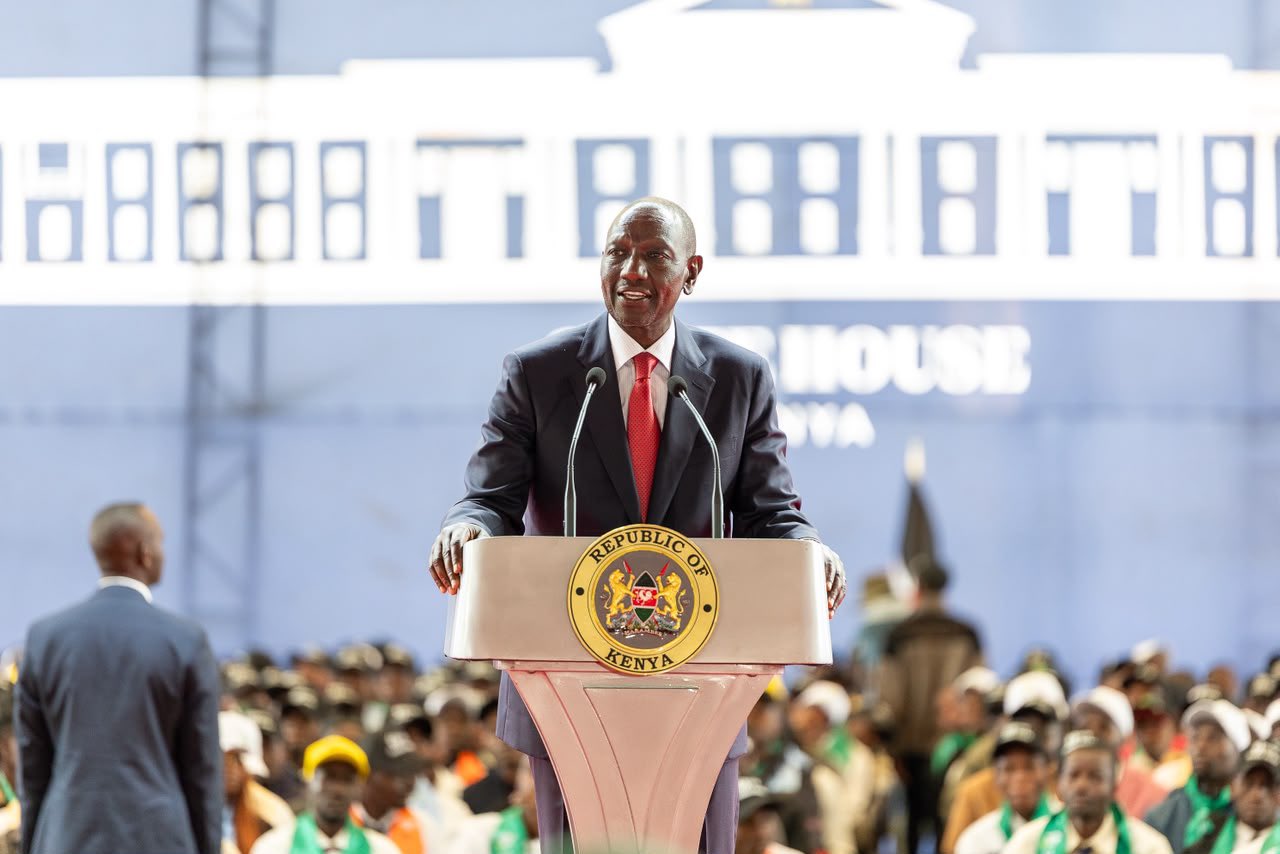
President William Ruto says Kenya is now Africa’s largest milk producer. Annual production has increased from 4.5 billion litres to 5.6 billion litres.
He attributed the growth to agricultural reforms and lower fertiliser prices. Cheaper fertiliser has helped farmers grow fodder and prepare silage for dairy cattle.
Ruto spoke on Thursday, October 8, during the Agriculture and Food Security Transformation Summit. The event took place at Jamhuri Park ASK Showground in Nairobi.
He said the government plans to increase milk production further.
Ruto Highlights Growth in Milk Production
Ruto said dairy farmers now earn more from milk sales than they did four years ago.
Farmers previously received KSh35 per litre. They now earn about KSh50, with the price expected to reach KSh60.
The President also reported higher milk production per cow. Daily output has risen from 2.5 kilogrammes to more than 5.6 kilogrammes.
He linked the growth to better access to farm inputs and animal feed.
Since 2022, the government has subsidised 38 million bags of fertiliser, according to Ruto. The subsidy reduced the price of a bag from KSh7,500 to KSh2,000.
He said cheaper fertiliser had helped farmers reduce costs and increase production.
Maize, Rice and Cotton Production Increase
Ruto also reported growth in other agricultural sectors over the past four years.
Maize production rose from 34.3 million bags in 2022 to about 71 million bags in 2025.
Cotton yields increased from 177 kilogrammes to 378 kilogrammes per acre. Meanwhile, rice production grew from 192,299 tonnes to more than 300,000 tonnes.
Ruto said higher yields could help farmers earn more while lowering production costs.
He explained that harvesting more crops from the same land reduces the cost of producing each bag. This could also help lower food prices without cutting farmers’ earnings.
Government to Pay KSh8 Billion New KCC Debt
Ruto announced that the government would pay KSh8 billion owed to New Kenya Cooperative Creameries (New KCC).
He said the payment would help the dairy company serve farmers more effectively.
The government also plans to clear outstanding debts in the coffee and sugar sectors. Ruto said the next Supplementary Budget would cover KSh2.8 billion in coffee debts and KSh1.8 billion in sugar debts.
Coffee farmers have also benefited from improved prices, according to the President.
The average coffee cherry price rose from KSh78.99 to KSh114.17 per kilogramme. This is above the guaranteed minimum return of KSh100.
In the sugar sector, Ruto said farmers and factory workers were receiving payments on time. Sugarcane farmers were also benefiting from bonuses.
Nine Million Farmers Registered Digitally
The government has registered and mapped nine million farmers on a digital platform, Ruto said.
The platform provides information to support planning and the delivery of agricultural services.
Meanwhile, the Agricultural Finance Corporation has disbursed KSh19.9 billion over the past four years. More than 218,000 beneficiaries have received the funds.
The financing supports agricultural activities and improves farmers’ access to credit.
Ruto Warns About Rising Food Import Bill
Despite the reported gains, Ruto said Kenya still faces major food security challenges.
The country’s annual food import bill has risen two-and-a-half times to about $3 billion. Imports of edible oil, wheat and rice account for a large share of the bill.
Ruto warned that dependence on imported food exposes Kenyans to global price increases.
Droughts, supply chain disruptions and shortages in other countries can push food prices higher in Kenya.
He said boosting local production would help protect households from these external shocks.
Government Targets 2.5 Million Acres Under Irrigation
Ruto said the government was working to expand irrigation and increase food production.
The area under irrigation has grown from 664,000 acres to 778,636 acres over the past four years.
The government plans to build large, medium-sized and small dams through the National Infrastructure Fund.
The initiative aims to expand irrigated land to 2.5 million acres. It would also help farmers produce more food and depend less on rainfall.
The Agriculture and Food Security Transformation Summit attracted more than 10,000 participants.
Those attending included farmers, agribusiness representatives, scientists, researchers and agricultural experts. They reviewed progress in agriculture and discussed ways to improve food security in Kenya.