

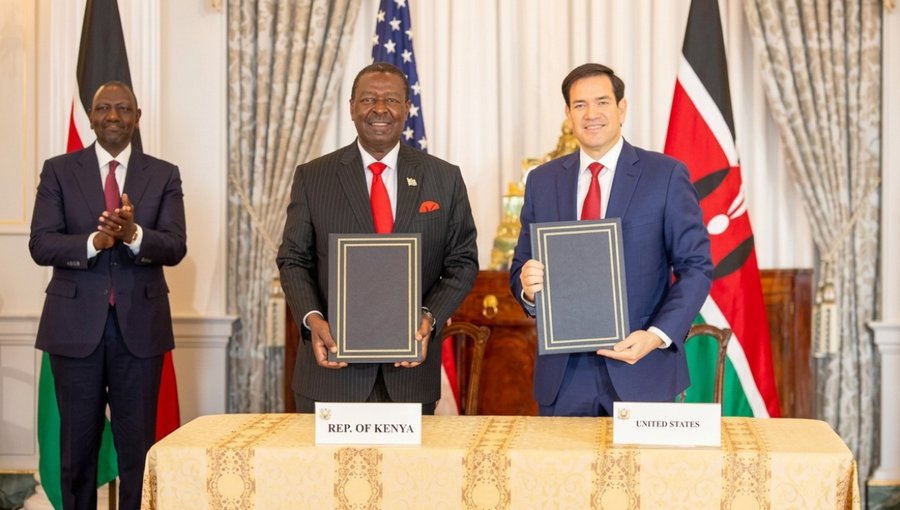
The Court of Appeal has lifted orders that blocked the implementation of Kenya’s health cooperation agreement with the United States.
The court ruled that protecting millions of Kenyans who depend on essential medical services was a key consideration. It said the suspension of the agreement could put patients at risk while the legal battle continues.
A three-judge bench overturned orders issued by the High Court on December 19, 2025. The orders had stopped the government from implementing the agreement signed by Kenya and the US on December 4, 2025.
Court Warns of Risks to Patients
The judges said suspending the agreement could disrupt important health programmes. These include treatment for HIV, tuberculosis (TB), malaria and other infectious diseases, as well as immunisation services.
“The lives of citizens who depend on treatment for HIV, TB, and malaria, provided under the Framework risk being negatively and irredeemably impacted,” the judges ruled.
They warned that some patients could even lose their lives if they failed to access treatment.
The decision followed an application by the Attorney General and the Health Cabinet Secretary. They asked the court to suspend the High Court orders as they prepared to challenge the decision on appeal.
The government argued that the suspension threatened essential healthcare services. It estimated that about 1.4 million Kenyans depended on medicines and medical support linked to the programme.
Officials also warned that interruptions to HIV and TB treatment could cause drug resistance. This could make infections harder to treat and create further public health risks.
The government further raised concerns about possible disruptions to immunisation, healthcare workers, service delivery and medical supply chains.
Court Says Public Interest Favours Implementation
The appellate judges agreed that delaying the programme could cause serious and irreversible harm.
They noted that the resources set aside for the agreement could go elsewhere before the court determined the appeal. If the government later won the case, it might struggle to restore the programme.
“If the applicants succeed on appeal, there will be no framework to implement which will render the appeal nugatory,” the court stated.
The judges also found that the government had raised valid legal questions that deserved consideration during the appeal.
They ruled that the risk of disrupting essential healthcare services justified allowing the agreement to proceed while the legal challenge remained pending.
“Public interest favours the implementation of the programme pending hearing of the appeal,” the judges said.
Omtatah, Katiba Institute Oppose the Deal
Busia Senator Okiya Omtatah Okoiti opposed the government’s application.
He argued that implementing the agreement before resolving the constitutional challenge could undermine fundamental rights and public accountability.
Omtatah raised concerns about data protection, privacy, public finances and devolution. He also questioned Parliament’s role in approving international agreements that create financial commitments and binding obligations.
The senator argued that the framework could violate Articles 1, 2, 10, 31, 43, 201 and 220 of the Constitution.
Katiba Institute also opposed the government’s application. The organisation argued that the government could not set aside constitutional safeguards and parliamentary oversight in the interest of faster healthcare delivery.
The respondents further claimed that the government had increased funding to address possible gaps caused by reduced external health financing.
Court Says Constitutionality Remains Unresolved
The Court of Appeal clarified that its decision did not establish whether the Kenya-US health agreement was constitutional.
The judges noted that no court had declared the framework unconstitutional after a full hearing. The High Court had only suspended its implementation while it considered the petition.
“There has not been any declaration of unconstitutionality of the said Framework,” the judges observed.
The court said the parties would address the constitutional questions during the main proceedings. It would not make a final determination on those issues at this stage.
This means the agreement can proceed for now, but the wider legal challenge remains unresolved.
Judges Raise Questions About High Court Proceedings
The government also challenged how the High Court handled the case.
It argued that the High Court heard the application on a date set for directions instead of scheduling a formal hearing. The government said it had not received adequate notice before the court proceeded.
The government also claimed that the proceedings breached the sub judice rule. It cited Nairobi High Court Petition No. E806 of 2025, which it said involved similar issues.
The Court of Appeal found that both arguments raised issues worth examining during the appeal.
“The case was indeed heard on a day that was fixed for directions, and whether the Court was correct in proceeding to hear the application before giving a formal hearing date, is an arguable point,” the ruling stated.
The judges also noted that conservatory orders appeared to have been issued in the other petition. They said the alleged breach of the sub judice rule therefore required consideration.
Court Sets Aside December 2025 Orders
The Court of Appeal had lifted the High Court orders on May 12, 2026. It stated that its substantive ruling would explain the reasons behind that decision.
In its final orders, the appellate court set aside the High Court’s December 19, 2025, ruling and the conservatory orders that had blocked implementation of the framework.
The decision allows the government to proceed with the Kenya-US health cooperation programme as it pursues its appeal.
However, the court has not settled the constitutional questions surrounding the agreement. Those issues will still require determination in the ongoing legal proceedings.