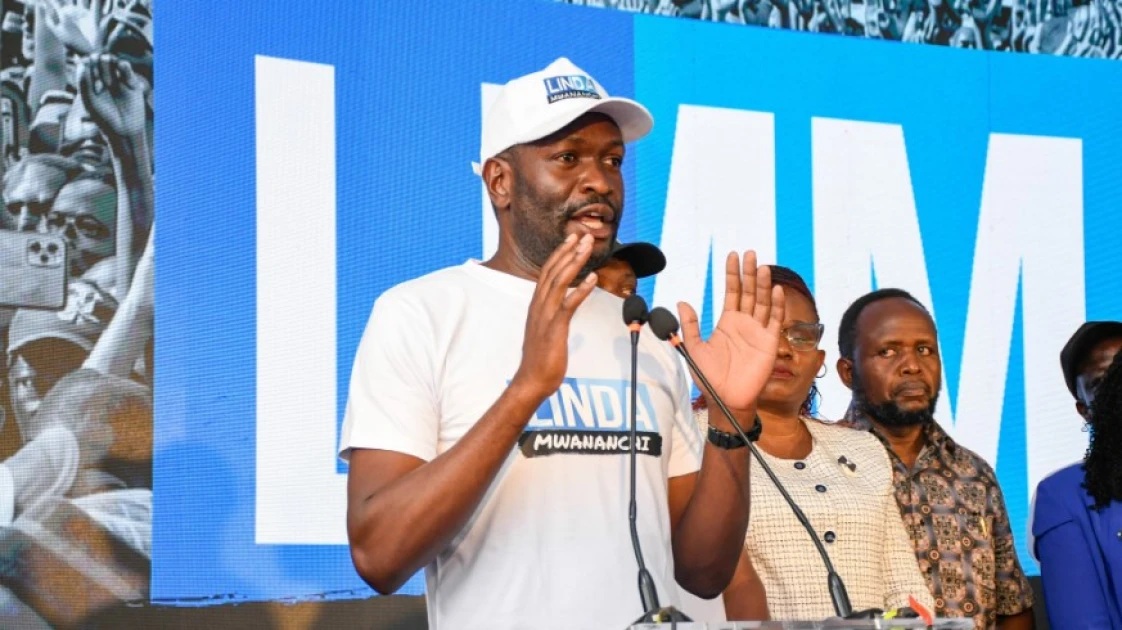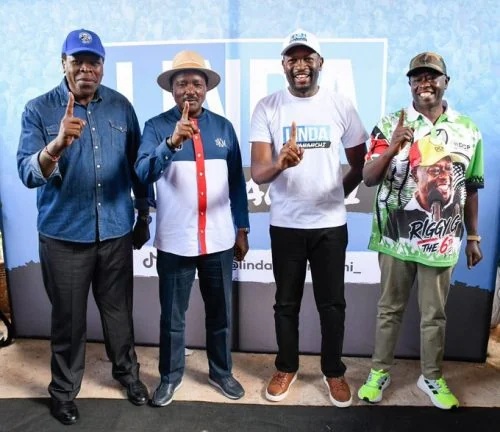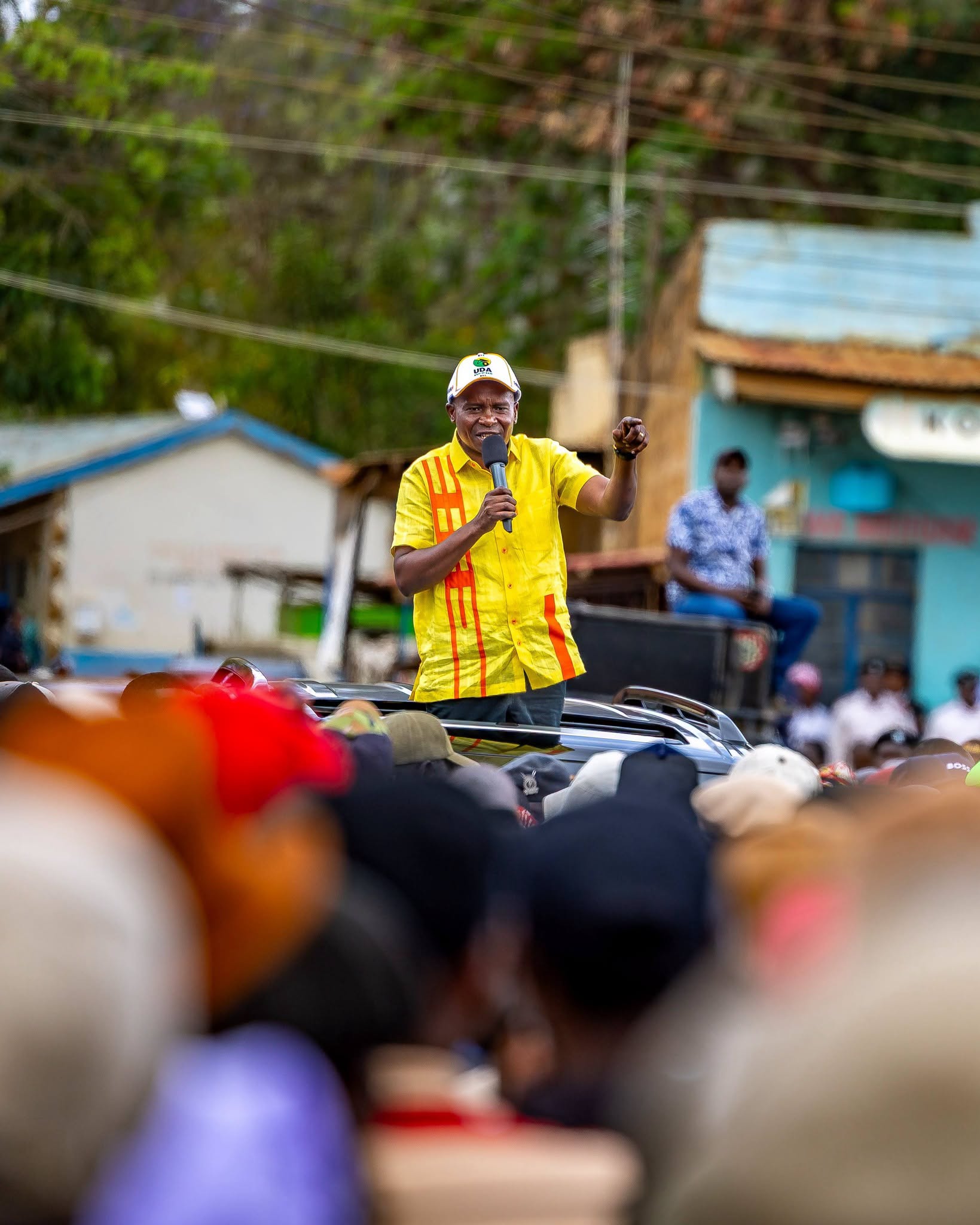

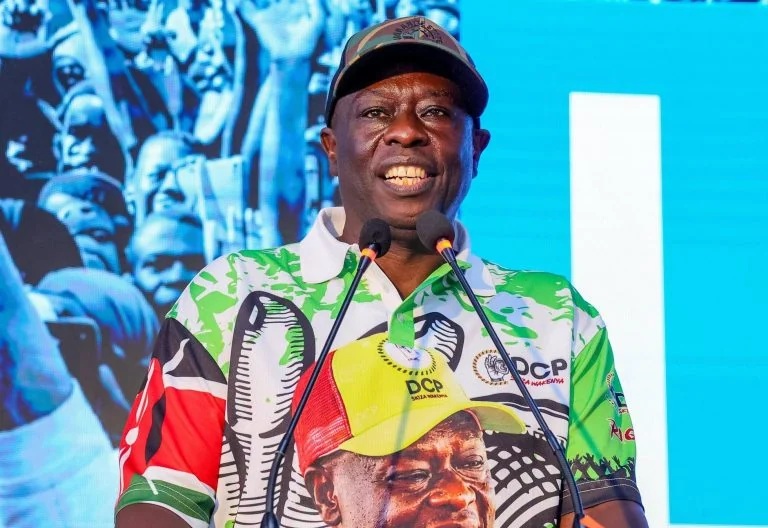
Gachagua has intensified his disagreement with Fred Matiang’i and Justin Muturi, arguing that opposition leaders seeking influence in the 2027 presidential race must first demonstrate that they can mobilize significant voter support.
Speaking at his Wamunyoro residence, former Deputy President Rigathi Gachagua said political experience and policy ideas alone would not be enough to defeat President William Ruto without a strong electoral base.
Also Read

Gachagua defends focus on voter numbers
The Democracy for the Citizens Party(DCP) leader said the opposition must concentrate on grassroots mobilization if it hopes to field a competitive joint presidential candidate.
He challenged Matiang’i and Muturi to spend more time building support across the country rather than criticizing his repeated emphasis on electoral numbers.
Gachagua has argued that opposition leaders should first consolidate support in areas where they have political influence before entering negotiations over a joint presidential ticket.
He maintained that the coalition ultimately intends to settle on one candidate to face Ruto in 2027.
Matiang’i warns against majoritarian politics
The disagreement follows criticism from Matiang’i, who has cautioned against building an opposition coalition primarily around regional or ethnic voting blocs.
The former Interior Cabinet Secretary has described what he calls “majoritarian arrogance” as a potential threat to opposition unity, arguing that smaller communities and political groups should not feel excluded from the coalition-building process.
Matiang’i has said the opposition must develop a broader national platform rather than relying solely on calculations about which leaders command the largest voting blocs.
Muturi accuses Gachagua of political bullying
Democratic Party leader Justin Muturi has also criticized Gachagua’s approach, accusing him of political bullying and questioning whether it supports the goal of creating a united opposition.
Muturi has argued that no single leader or community should dictate how the opposition chooses its presidential candidate or structures its alliances.
Gachagua rejected those accusations and said his position was based on what he described as the practical realities of presidential elections.
By-election results enter opposition dispute
The former Deputy President has also pointed to recent by-election results as evidence that political leaders need to demonstrate their ability to deliver votes.
He cited contests in Ol Kalou and other areas while questioning whether some of his critics had built sufficient grassroots support.
The figures and conclusions drawn from those contests form part of Gachagua’s political argument and do not by themselves determine nationwide support ahead of the 2027 election.
Former Agriculture Cabinet Secretary Mithika Linturi has backed Gachagua’s position, saying opposition leaders should strengthen their respective political bases before entering negotiations over the presidential ticket.
Opposition alliance faces growing pressure
The dispute comes as opposition figures continue consultations over a possible joint challenge to Ruto.
Gachagua has been working alongside figures including Wiper leader Kalonzo Musyoka, Eugene Wamalwa and Edwin Sifuna, although disagreements remain over how a presidential candidate should ultimately be chosen.
The latest exchanges underline the central challenge facing the opposition: balancing regional political strength with the need to build a coalition capable of appealing to voters across the country.