
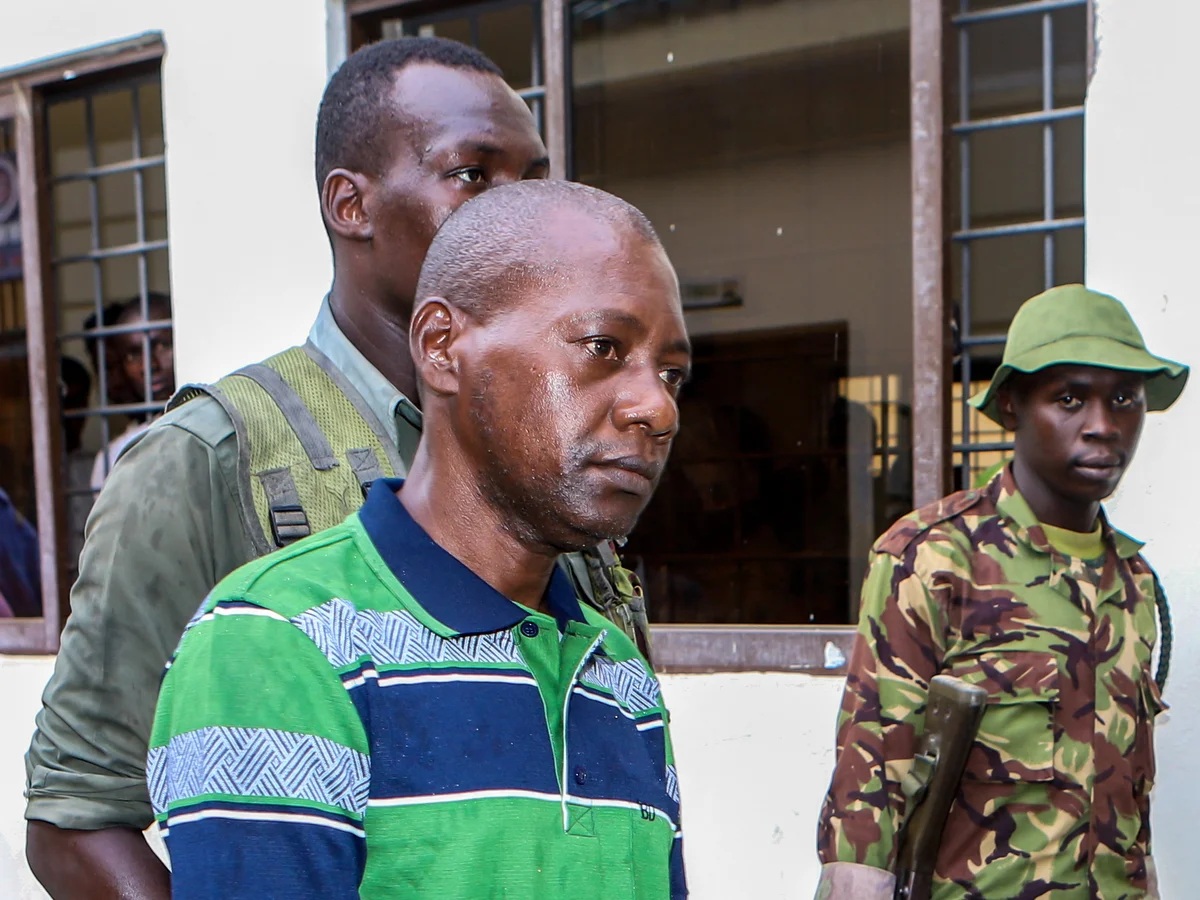
Mackenzie could face the death penalty after prosecutors asked the High Court to impose capital punishment on the controversial preacher following his conviction over the murder of 191 people in Shakahola Forest.
The Office of the Director of Public Prosecutions told the Mombasa High Court that the scale of the killings, the number of victims and the circumstances surrounding the deaths justified the maximum sentence available under Kenyan law.
Also Read


Mackenzie convicted on 191 murder counts
Paul Nthenge Mackenzie was convicted alongside 28 co-accused on October 19 after the court found them guilty of 191 counts of murder.
The victims included 190 children and one adult, with the offences committed between January 2021 and September 2023 in Shakahola Forest, Kilifi County.
Justice Diana Kavedza found that the prosecution had proved that victims were subjected to an organized system of extreme fasting and religious indoctrination.
Mackenzie had denied forcing anyone to die, but the court rejected his defence.
DPP asks court for death penalty
Assistant Director of Public Prosecutions Jami Yamina told the court that prosecutors support a death sentence for Mackenzie, subject to the judge considering mitigation, remorse and the possibility of rehabilitation.
The prosecution cited Section 204 of the Penal Code and the Supreme Court’s Muruatetu jurisprudence while arguing that the seriousness of the offences warranted the harshest punishment.
Prosecutors also argued that sentencing should serve several purposes, including deterrence, punishment, public protection and denunciation of the crimes.
Life terms sought for co-accused
The DPP has asked the court to impose life imprisonment on 27 of Mackenzie’s co-convicts.
Prosecutors argued that many of them had been heavily indoctrinated and could remain vulnerable to radicalization if released without rehabilitation.
The National Counter Terrorism Centre has proposed voluntary rehabilitation and counter-narrative programmes aimed at helping the convicts disengage from extremist beliefs.
If the court declines to impose life sentences, the prosecution has proposed consecutive custodial terms to reflect the fact that each of the 191 deaths represents a separate murder conviction.
Mackenzie asks court for mercy
Mackenzie has meanwhile asked the court for leniency ahead of sentencing.
Through his lawyer, he told the court that he and his co-accused had also lost relatives and property during the events surrounding Shakahola and urged the judge to consider those circumstances before imposing sentence.
The prosecution has challenged that position, arguing that most of the convicts have not shown sufficient remorse and continue to reject responsibility for the deaths.
Sentencing set for November 6
Justice Kavedza is expected to sentence Mackenzie and the other 28 convicts on Friday, November 6.
The murder case is only one of several legal proceedings involving Mackenzie. He also faces separate charges linked to terrorism, manslaughter and the alleged denial of education to children, all of which he has denied.
The Shakahola investigation has resulted in the recovery of more than 400 bodies from the forest, while inquiries into additional deaths remain ongoing.