
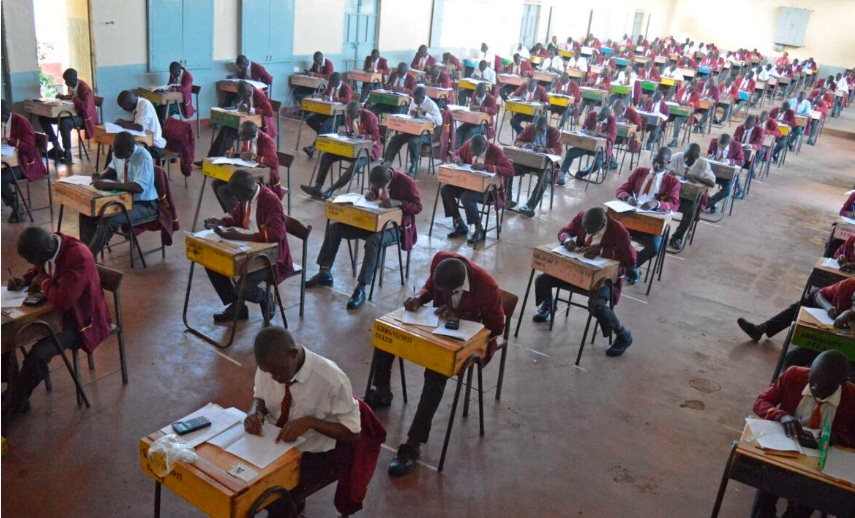
KCSE candidates across Kenya will begin the main written phase of the 2026 national examinations on Monday, November 2, under tightened rules aimed at protecting the integrity of the tests.
The Kenya National Examinations Council has introduced additional controls for examination centers, including a ban on all wristwatches inside examination rooms. Candidates will instead rely on wall clocks provided by their centers.
The written papers are scheduled to continue until November 20.
Also Read


KCSE candidates start with English and Chemistry
According to the official timetable, candidates will begin Monday morning with English Paper 1.
The paper will start at 8am and run for two hours.
Candidates will then return for Chemistry Paper 1 during the afternoon session, beginning at 2pm and ending at 4pm.
Mathematics Paper 1 follows on Tuesday morning, while candidates will sit English Paper 2 later that afternoon.
Chemistry Paper 2 and English Paper 3 are scheduled for Wednesday before Kiswahili papers begin on Thursday.
Although the main written examinations start on Monday, some candidates have already completed oral, practical and specialized papers that began in October.
Wristwatches banned from examination rooms
Candidates will face stricter controls when entering examination rooms this year.
KNEC has directed that all types of wristwatches be kept out of examination rooms, including ordinary analogue watches.
Previously, restrictions largely targeted smartwatches and other electronic devices. Under the latest directive, candidates will have to monitor their remaining examination time using wall clocks installed at centers.
Mobile phones, tablets, laptops, Bluetooth devices and recording equipment also remain prohibited.
Programmable calculators are not allowed, although approved non-programmable scientific calculators may be used where a particular examination paper permits them.
KCSE security measures tightened
KNEC has also instructed examination centers to maintain strict control over who accesses examination materials and venues.
Examination containers are expected to be opened from 7am, while authorized officials must carry original identification documents.
Center managers are also required to maintain approved lists of personnel allowed to participate in the administration of the examinations.
The measures form part of wider government efforts to prevent cheating and the circulation of purported leaked examination papers.
Interior Principal Secretary Raymond Omollo has warned parents, teachers and candidates against people claiming they can obtain examination papers before they are officially administered.
He said security agencies are monitoring individuals suspected of involvement in examination fraud.
Candidates warned against examination fraud
Education officials have repeatedly cautioned candidates and parents against paying for papers advertised as leaked examinations.
Education Cabinet Secretary Julius Migos Ogamba has said claims that individuals can provide advance access to national examination papers should be treated as fraudulent.
Authorities have urged the public to report suspected examination malpractice rather than engage with people offering such material.
The government has also restricted outside activities and visits at secondary schools during the examination period to reduce disruption and unnecessary access to candidates.
KCSE examinations end November 20
The examination period will run through most of November, with candidates sitting subjects including Mathematics, Kiswahili, Biology, Chemistry, Physics, History and religious education.
KNEC says first-session papers generally begin at 8am, while second-session papers start at 2pm unless otherwise specified on the official timetable.
The final papers are scheduled for Friday, November 20.
For thousands of candidates, Monday will therefore mark the beginning of the most intensive stage of their final secondary school examinations.