

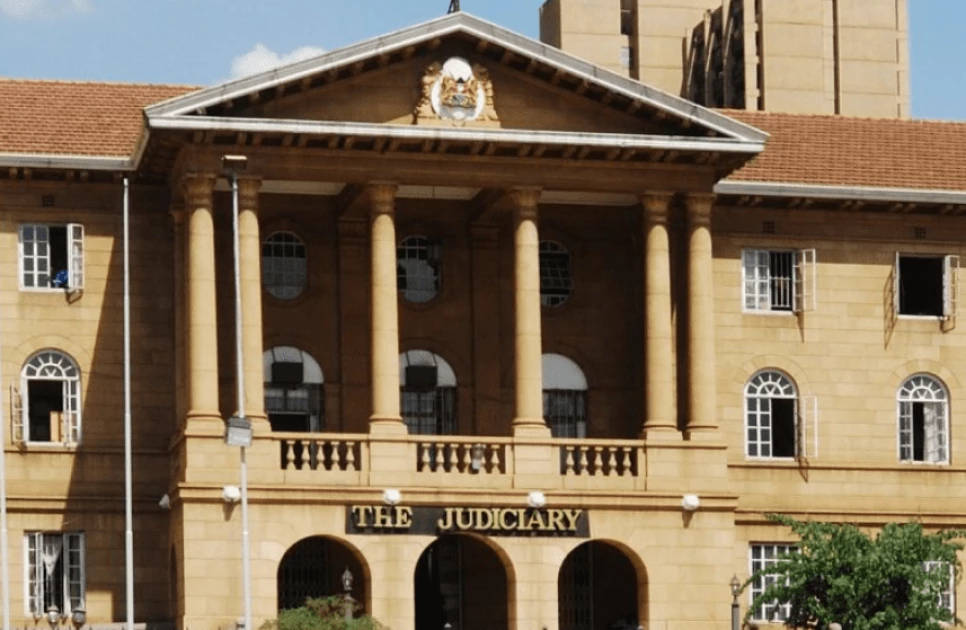
The High Court has cancelled notices issued by the Judicial Service Commission (JSC) against seven Supreme Court judges.
The complaints sought the removal of the judges from office.
A three-judge bench ruled that the JSC failed to carry out the required preliminary assessment.
The assessment should have happened before the removal process began.
Justices Charles Kariuki, Lawrence Mugambi and Bahati Mwamuye delivered the ruling.
They declared the notices and related directions unconstitutional.
The judges also found them invalid and legally ineffective.
Court blocks further action by JSC
The judges barred the JSC from taking further action based on the notices.
The order also stops the commission from starting new proceedings.
It further prevents the JSC from continuing proceedings based on the same complaints.
According to the court, the JSC failed to prove that it properly convened before issuing the notices.
The judges also found another problem with the process.
They said the commission failed to meet the required preliminary threshold.
That threshold helps protect the judges’ right to fair administrative action under Article 47 of the Constitution.
JSC criticised over handling of complaints
The court found that the JSC handled the complaints against the seven judges collectively.
It said the commission should have addressed the issues against each judge as required by law.
The court also found that the JSC failed to clearly state the grounds for removal.
It said the commission did not provide the details required under Article 168(1)(a) to (e) of the Constitution.
These provisions set out the constitutional grounds for removing a judge.
As a result, the court issued an order of certiorari.
The order cancelled the JSC notices dated January 27, 2025.
It also covered related communications and decisions.
The order further applied to actions and proceedings linked to three JSC petitions.
In addition, the court issued an order of prohibition.
This order prevents the JSC and its agents from taking further action based on the notices.
Judges challenged removal process
The case followed petitions challenging the way the JSC handled the complaints.
The complaints sought the removal of the seven Supreme Court judges.
Former Law Society of Kenya President Nelson Havi filed one of the complaints.
The judges argued that the JSC should first assess the complaints.
They said the commission should determine whether the complaints met any constitutional grounds for removal.
The judges also challenged the JSC’s account of its internal process.
The commission said a subcommittee had reviewed the complaints.
It said the subcommittee later made recommendations.
The JSC reportedly adopted those recommendations on January 24, 2025.
However, the judges said the commission had not produced supporting records.
These included minutes, deliberations and resolutions.
Court says complaints need proper screening
Justice Lawrence Mugambi delivered the judgment on behalf of the bench.
He said complaints against judges must undergo proper initial screening.
This process must happen before a removal case can move forward.
The court said preliminary assessment protects judicial independence.
It also helps maintain public confidence in the judiciary.
At the same time, the process protects the right to fair administrative action.
The judges found that the notices gave the judges 21 days to respond.
However, the notices did not provide enough details about the allegations.
They also failed to identify the specific constitutional grounds for removal.
The court said judges need clear information before responding to such complaints.
JSC remains empowered to receive complaints
The High Court confirmed that the JSC has constitutional powers under Article 168.
The commission can receive and consider complaints against judges.
However, it must exercise those powers within the law.
The court also rejected the argument that Article 168 prevents judicial review of JSC actions.
It held that courts can examine whether the commission followed the Constitution.
They can also review compliance with the Judicial Service Act.
In addition, the court can consider whether the commission followed fair administrative action principles.